

Buying guide
An oriental rug is an investment for life. Here's what to look for when selecting and buying.
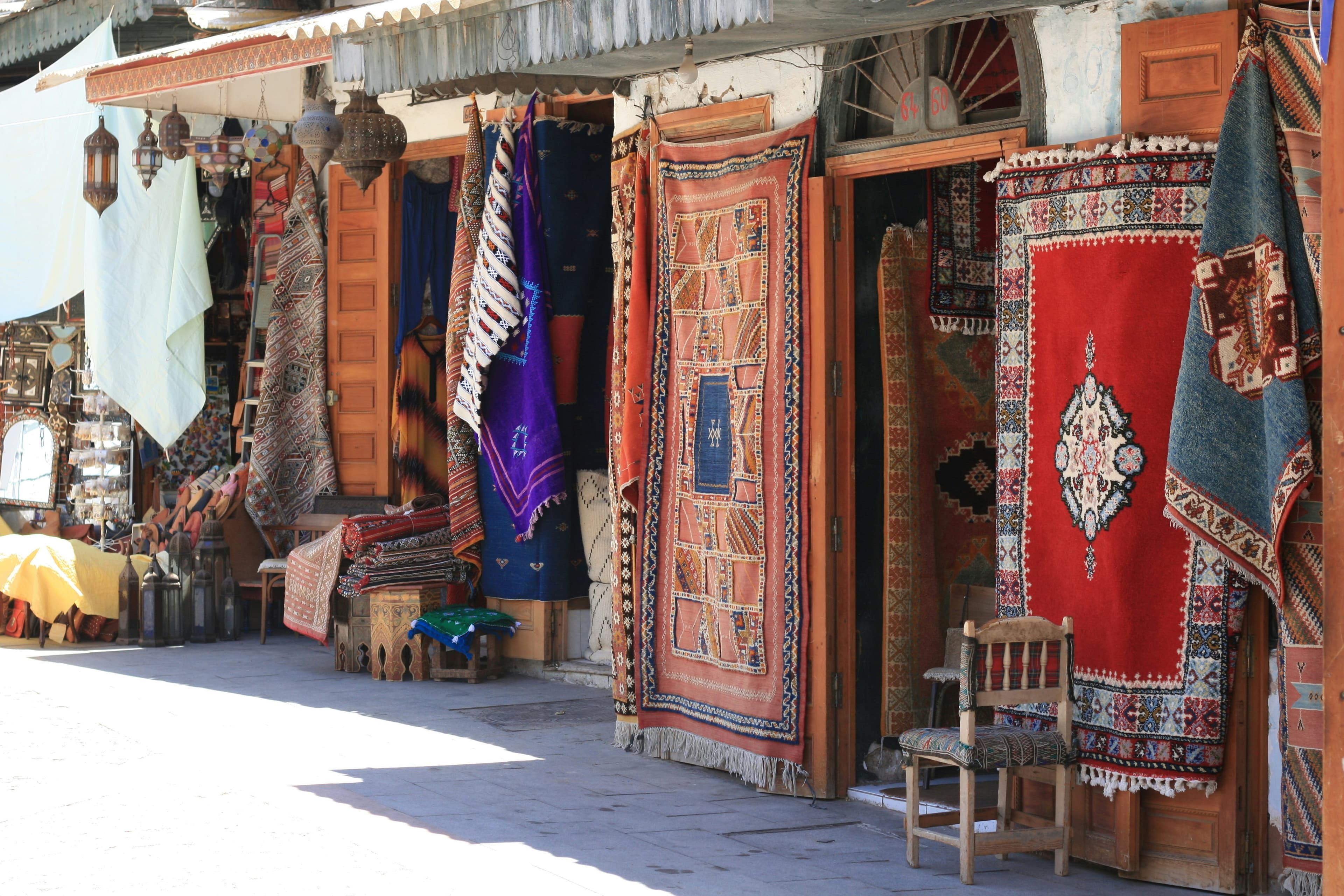
#Recognizing quality
Turn the rug over and look at the back: on a high-quality hand-knotted rug the pattern is clearly visible there, and the individual knots are easy to see. The finer and more uniform the knots, the higher the quality. Run your hand over the pile — good wool feels supple, not scratchy or dry. Also look at the regularity of edges and fringes: machine-sewn fringes point to industrial production.
#Hand-knotted vs. machine-made
A hand-knotted oriental rug is one of a kind, with slight irregularities that are part of its charm. Machine-made rugs are cheaper but uniform and less durable. Hand-knotted rugs develop patina over the years and, with good care, can last generations — many even increase in value. A simple test: bend the rug back and look between the rows. On hand-knotted rugs you'll see individual knots around the warp threads; on machine-made rugs you'll see continuous loops.
#The right size
Measure the desired area precisely before buying. In the living room the rug should be large enough for the front legs of the seating to sit on it. In the dining room, plan for at least 60 cm of overhang on each side of the table so that chairs stay on the rug when pulled out. Common standard sizes range from 60 × 90 cm (runner) through 200 × 300 cm (living room) to oversized pieces of 400 × 600 cm and above.
#Color and interior design
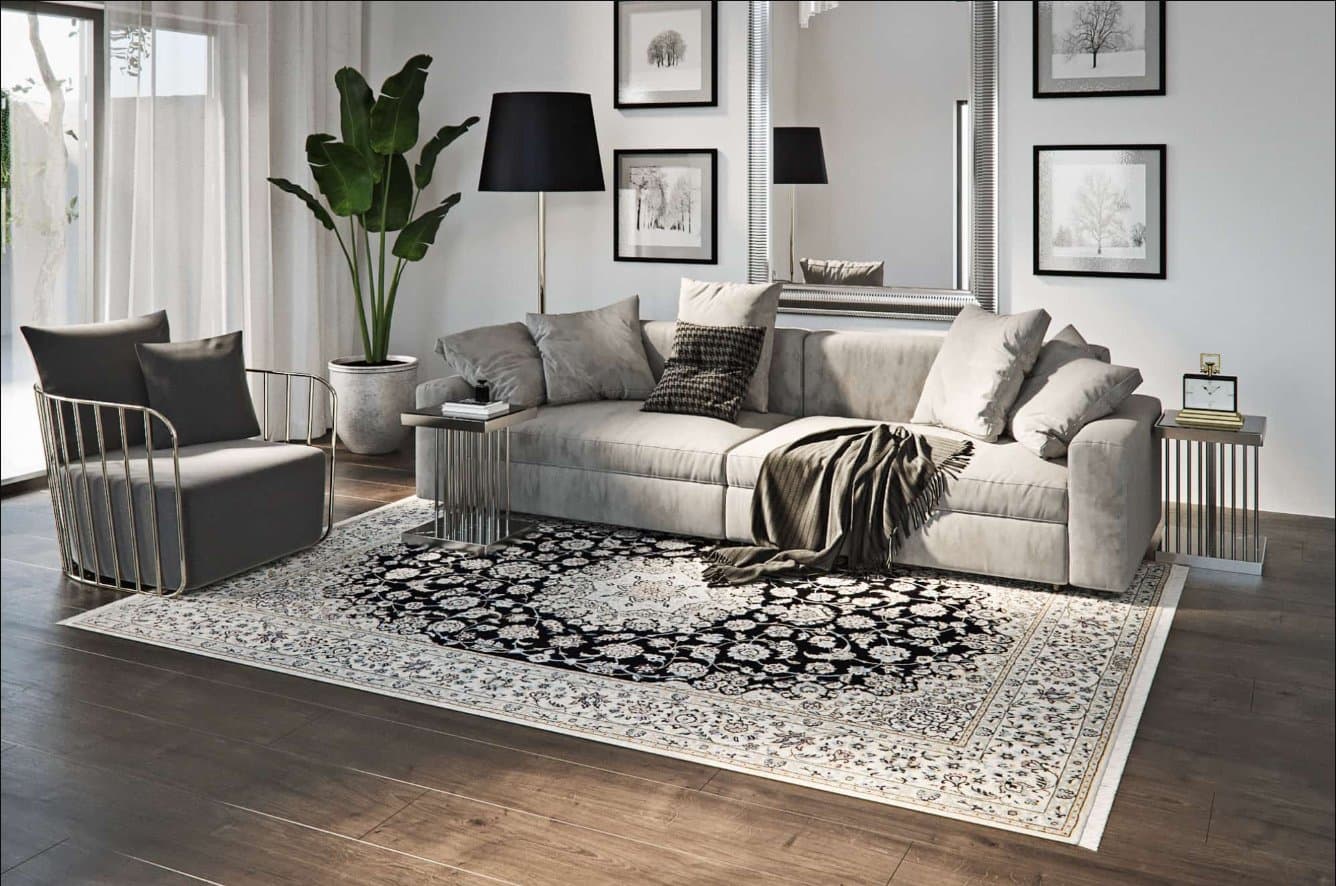
Photo: Morgenland Teppiche
An oriental rug can be the centerpiece of a room or act as a subtle accent. Warm reds and earth tones pair perfectly with classic interiors, while muted pastels (typical of Ziegler and vintage styles) enrich modern rooms. Consider the lighting: dark rugs look especially elegant in light rooms, while light rugs make small rooms feel more spacious.
#Price factors
The price of an oriental rug is determined by several factors: material (silk is more expensive than wool), knot density (more knots means more labor hours), origin (Persian manufactory rugs sit above Afghan nomadic rugs), age, and condition. A simple hand-knotted rug starts at a few hundred euros, while rare collector's pieces from Isfahan or Qom reach five-figure sums. What matters is the quality-to-price ratio — compare similar pieces from different sellers.
#Certificates and authenticity
Reputable dealers can provide information about the origin, age, and material of a rug and issue a certificate of authenticity on request. Look for details on knot density, material used, and place of manufacture. For antique pieces, an appraisal from an independent expert can be worthwhile. Be wary of offers that seem too cheap — inferior copies often use cheap materials and simplified patterns.
Keep reading
Identifying oriental rugs
The key markers to distinguish a genuine hand-knotted oriental rug from imitations.
ReadWoven and machine-made rugs
Tufting, Wilton, Axminster: how machines make rugs — and how to tell them from hand-knotted originals.
ReadCare and cleaning
Vacuuming, stains, moth protection, storage: how to keep your rug beautiful for generations.
Read